
What helps a wound heal properly?
Most minor wounds will heal on their own. But the conditions you create in the first few days shape how comfortably the skin recovers, how cleanly the wound closes, and how little it leaves behind. Here is what helps, and what gets in the way.

The three pillars of wound healing
The body heals minor wounds on its own. Its job is to grow new skin cells across the broken surface, layer by layer, until the gap is closed. Your job is to keep that process from being interrupted.
Three conditions tend to matter most:
- A clean wound, so the body's healing cells are not busy fighting infection.
- A moist wound, so new skin cells can move easily across the wound bed.
- A protected wound, so daily friction, dirt and accidental touches do not keep reinjuring it.
If you can keep those three conditions stable, most everyday cuts, grazes and abrasions will heal faster, more comfortably, and with a smaller mark.
Cleaning is its own routine. If you have not read it yet, see our step-by-step guide to cleaning a wound properly.
Why moist wound healing matters
For a long time the advice was simple: keep wounds dry, let them scab. That has changed. Modern wound-care research points the other way. A slightly moist wound bed tends to heal faster, with less scarring, than one that has dried out.
The reason is mechanical. New skin cells need a thin layer of fluid to migrate across the wound surface. In a dry wound the cells run into a barrier of dried blood, crust and dead tissue. In a slightly moist wound, they can move freely and close the gap in fewer steps.
A scab is not the enemy. The body forms one as a temporary cover and it does its job. But a scab can also crack, pull on healthy skin around it, and break open again every time you bend the joint or bump the edge. Keeping the wound clean and slightly moist with a purpose-made wound spray and a covered dressing reduces unnecessary drying, cracking and discomfort.
Protect the wound while it heals
After cleaning, the wound needs protection from the everyday. Clothing rubbing against it. Dust and dirt landing on it. Water from a shower. The back of a hand brushing past. Even a small wound can become irritated and reopen if it is left exposed.
A plaster or sterile dressing sized to extend a little beyond the edges of the wound does three useful things at once: it keeps the wound clean, it keeps it slightly moist, and it stops it from being knocked open again.
Replace the dressing daily, or sooner if it gets wet, dirty or comes loose. Wash your hands before each change.
Don't disturb the healing process
The most common reason a minor wound takes longer than it should to heal is not dirt or infection. It is interference. Picking at the scab. Peeling back the edges to see how it is doing. Pulling off a dressing too roughly. Each of these undoes a layer of repair work the body has already done.
The gentlest, most boring approach is usually the right one: clean, cover, and leave it alone.
What slows wound healing down?
A wound that is not closing on a reasonable timeline usually has one or more of these things working against it:
- Dirt or particles left in the wound
- A wound that has dried out too much and formed a thick, cracking scab
- Repeated friction from clothing, shoes or activity
- Picking at the wound or removing scabs early
- Harsh products that irritate the skin around the wound
- A wet or dirty dressing left in place too long
- Poor nutrition or dehydration
- Smoking, which reduces blood flow to the skin
Some people heal more slowly because of underlying factors: diabetes, poor circulation, certain medications, or a weakened immune system. If a small wound is not visibly progressing after a few days, that is a signal to check with a healthcare professional.
Why alcohol-free care matters
Many people associate wound care with a stinging or burning feeling. That association comes from older alcohol-based products. For routine minor wounds the sting is not a sign that the product is working. It is a sign that the product is irritating the freshly damaged skin underneath.
A gentler, alcohol-free product can do the same cleaning job without that discomfort. That matters for everyone, but especially for children, for whom the expectation of pain can turn first-aid into a battle.
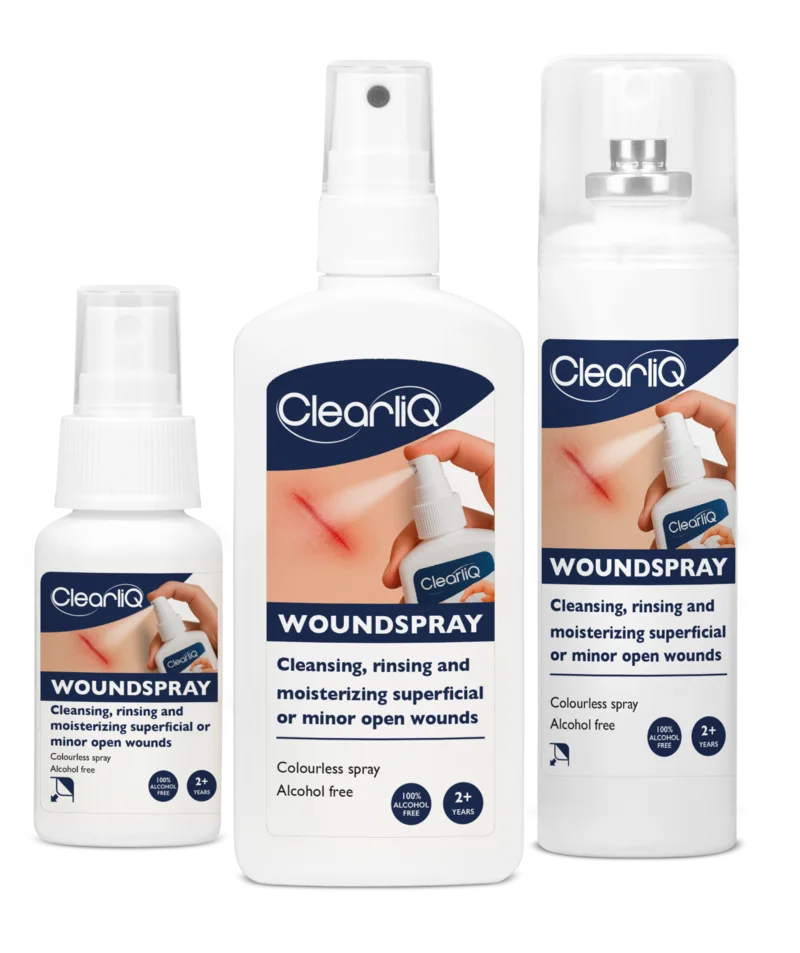
ClearliQ Woundspray is 100% alcohol-free and designed for cleansing, rinsing and moisturizing superficial or minor open wounds such as cuts, abrasions and open blisters. It is skin-friendly and suitable for children from 2 years old. Learn more.
Support recovery from the inside
Wound healing is also a metabolic process. The skin is rebuilding itself, and that needs raw material:
- Protein, vitamin C and zinc all play a role in tissue repair. A balanced diet usually covers this.
- Enough fluids keep skin tissue elastic and well-supplied.
- Rest. Most tissue regeneration happens at night. Sleep is part of the treatment.
- Avoid smoking while a wound is healing. Smoking reduces blood flow to the skin, which slows the delivery of oxygen and nutrients to the healing tissue.
These are not dramatic interventions. But for a wound that is healing slower than it should, the answer is sometimes upstream of the dressing.
Reducing visible marks
Not every scar can be prevented. Some marks come down to the wound itself, its location, and individual skin response. But you can reduce the likelihood of an unnecessarily visible mark by giving the skin good conditions to recover:
- Clean the wound gently
- Keep it covered while it heals
- Don't pick at scabs or peel skin
- Don't let it dry out too much
- Change dressings when they get wet or dirty
- Once the wound has fully closed, protect the new skin from direct sun for the first few months. Fresh skin can darken or discolor more easily under UV light.
When to see a doctor
Most minor cuts and grazes heal at home without trouble. See a doctor or urgent care service if any of the following apply:
Red flags
- Bleeding does not stop with firm pressure within 10 minutes
- The wound is deep, gaping, or will not stay closed
- Redness, swelling, warmth or pus appears around the wound
- A red streak spreads from the wound onto the surrounding skin
- The person has a fever, or the pain is increasing after the first 48 hours
- A small wound is not visibly progressing after several days
- The person has diabetes, poor circulation, an immune condition, or takes medication that affects healing
- The wound was caused by a bite, a rusty or dirty object, or a deep puncture
If you are not sure, ask. It is always better to check once than to miss a wound infection.
Frequently asked questions
Do wounds heal faster wet or dry?
Is it okay to leave a wound uncovered?
Why shouldn't I use alcohol on a wound?
How long does a minor wound take to heal?
What slows wound healing the most?
Recommended product
ClearliQ Woundcare — Class IIa medical device
ClearliQ Woundspray
Cleansing, rinsing and moisturizing superficial or minor open wounds. Skin-friendly. Suitable for children from 2 years old.
The Wound Spray solution cleans and moistens superficial or minor open wounds such as cuts, abrasions and open blisters in skin. It can also be used for chronic wounds and postoperative wound care after careful medical consultation in these cases.
- 100% alcohol-free.
- Protects against infections.
- Perfect for cleaning wounds before applying plasters.
Available in 50 ml and 100 ml.
For external use only. Do not use in mucous, in the middle or inner ear and/or in the eye area. Do not use continuously for longer than 7 days. Keep out of reach of children. Always read the instructions for use.
This page is for general information only and does not replace professional medical advice. If you are unsure about a wound, contact a healthcare professional.
Subscribe to our Newsletter
Stay up to date with ClearliQ's latest news, health tips, and new product launches.